01
Define the question before the visit
An audit should resolve a specific uncertainty. Is the dining room waiting on the kitchen, is seating creating an avoidable order peak, or are managers repeatedly recovering the same failure? We agree the scope, service windows and evidence needed before observing the restaurant.
For a New York operation, the sample may include pre-theater dining, a weekday lunch or a weekend service if those periods are relevant to your actual trade. These are possible observation windows, not assumptions about every NYC restaurant.
02
Follow a full service across the handovers
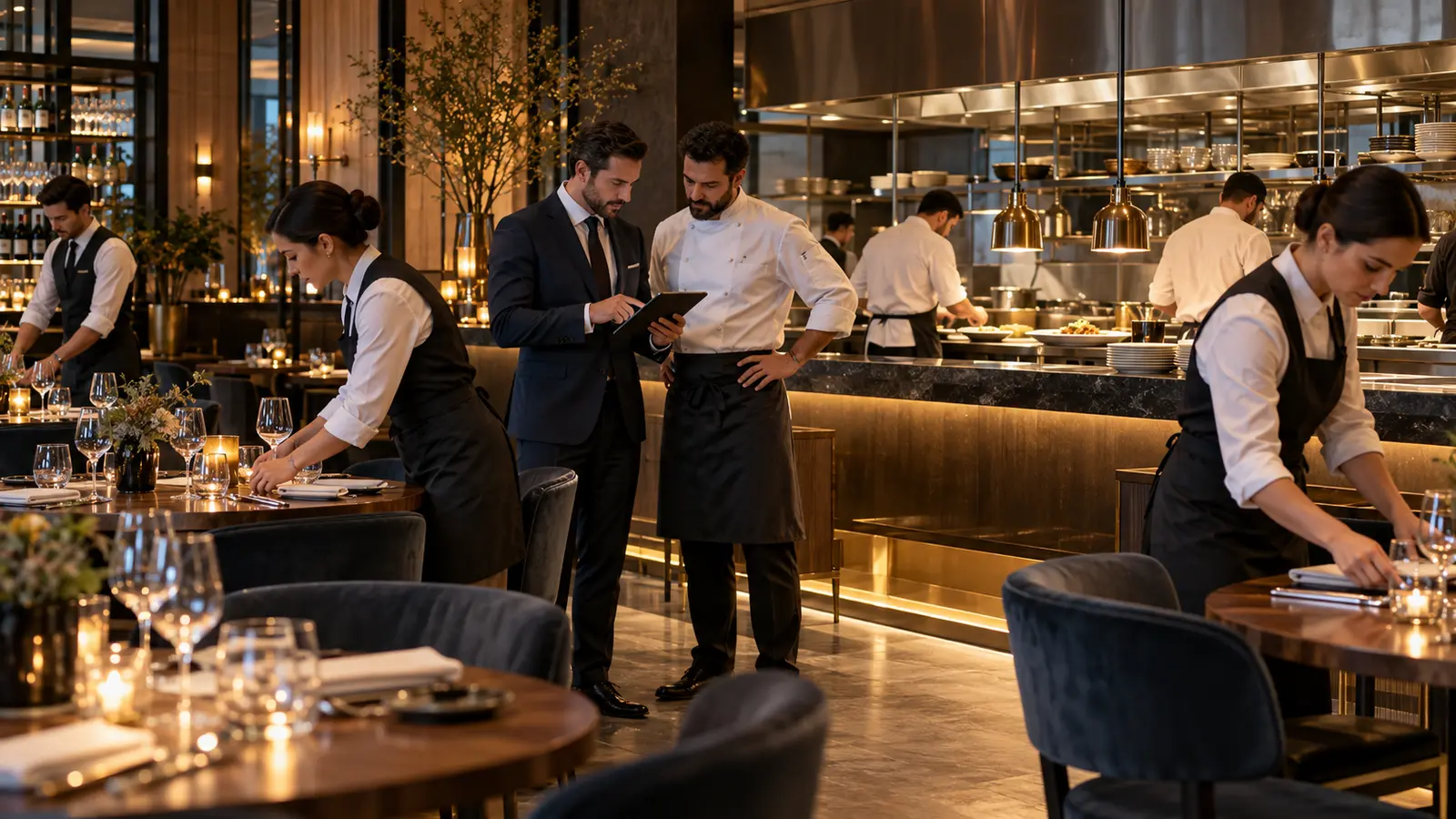
Observation connects preparation, reservations, seating, ordering, pass coordination, food delivery, clearing and payment. The aim is to see where work waits, repeats or changes hands without a clear owner. An announced, discreet visit can be arranged without turning normal service into a staged demonstration.
- Preparation and readiness before doors open
- Front-of-house and kitchen communication
- Section ownership and deployment during peaks
- Order accuracy, delays and guest updates
- Management escalation and recovery routines
03
Separate evidence from interpretation
Each significant finding records the observed situation, the service or operating consequence and the evidence supporting a likely cause. A single delayed table is not enough to diagnose the whole restaurant. We compare repeated observations and discuss constraints with the responsible managers.
Available booking patterns, anonymized guest feedback, schedules and operating reports can add context. Share only what is needed for the agreed question. Gaps in the evidence remain visible in the findings rather than being presented as certainty.
04
What the audit hands over
The deliverable is a prioritized findings report, a management debrief and an action plan identifying proposed changes, owners and follow-up measures. Immediate corrections are distinguished from changes requiring investment or testing. The agreed scope defines the depth of analysis and any additional deliverables.
Implementation is a separate scope unless explicitly included. An audit does not certify food safety, licensing or employment compliance; those matters remain with the operator and its qualified local advisers.
05
From diagnosis to a first operating test
An illustrative finding might connect long ticket times with a large seating wave and an unclear expediter role. The first test could adjust seating coordination and pass ownership during an equivalent service. Management would then compare delays, order corrections and guest updates before expanding the change.
Servicecraft travels for agreed New York assignments and has no permanent NYC office. Send the venue location, service format, key concern and preferred timing to discuss a paid audit and travel scope.